
SAFETY VEST: 5 Critical Mistakes That Lead to Serious Accidents
Meta Description: Are you compromising worker safety? Avoid these 5 critical mistakes with SAFETY VEST usage in 2026 to prevent serious industrial accidents and ensure compliance.
I. Introduction
In high-risk industrial zones, construction sites, and logistics hubs, the SAFETY VEST is the most fundamental piece of Personal Protective Equipment (PPE). While seemingly simple, it serves as the vital visual link between a worker and a potential hazard, such as heavy machinery, moving vehicles, or low-visibility work environments.
However, complacency often leads to improper selection or maintenance, transforming this life-saving gear into a false sense of security. As safety standards evolve in 2026, failing to recognize the nuances of visibility technology and garment integrity can lead to devastating workplace accidents. Understanding the common pitfalls in how these vests are utilized is essential for any facility manager or worker prioritizing accident prevention.
II. What Is a SAFETY VEST?
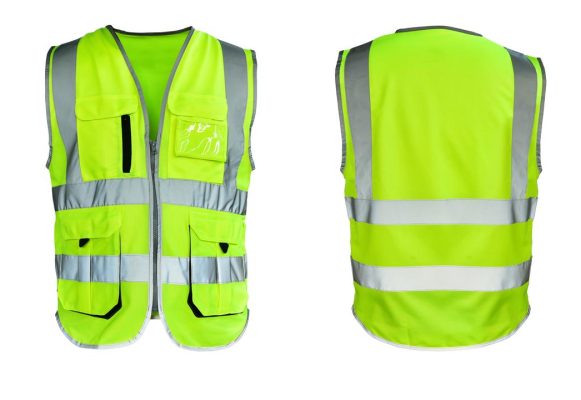
A SAFETY VEST is a high-visibility garment constructed from fluorescent materials (typically yellow, orange, or lime) and integrated with retro-reflective tape. These materials work together to ensure the wearer stands out against complex backgrounds during the day and reflects light back to its source—such as vehicle headlights—at night.
Beyond mere color, these vests are designed to meet specific technical standards (like ANSI/ISEA 107 in the U.S. or EN ISO 20471 in Europe) which dictate the minimum amount of high-visibility fabric and the placement of reflective tape required for different risk categories.
III. 5 Critical Mistakes That Lead to Serious Accidents
1. Using Non-Compliant or Faded Materials
Over time, UV exposure causes fluorescent colors to fade, and washing degrades the reflectivity of the tape. Many accidents occur because workers continue to wear vests that no longer meet visibility requirements.
-
The Risk: In low-light conditions, a faded vest fails to reflect light effectively, rendering the worker nearly invisible to equipment operators.
2. Failure to Account for Site-Specific Backgrounds
Choosing a lime-colored SAFETY VEST for a work environment filled with green foliage or reflective machinery is a classic error.
-
The Risk: If the garment’s color does not contrast significantly with the background, the worker loses their “visual edge,” increasing the chance of being overlooked by vehicle drivers.
3. Wearing Vests Open or Obstructed
A common mistake is wearing the vest unzipped, loose, or under other clothing like jackets or tool bags.
-
The Risk: Obstructing the reflective tape or fluorescent fabric significantly reduces the total visible surface area, failing the mandatory standards for visibility coverage.
4. Ignoring the Need for “Class” Differentiation
Facilities often make the mistake of using the same vest for all roles, regardless of whether the worker is near high-speed traffic (Class 3) or inside a low-speed warehouse (Class 2).
-
The Risk: Using a low-visibility vest in a high-speed, high-hazard environment prevents the worker from being seen in time for a driver to react.
5. Neglecting Daily Inspection and Maintenance
Treating a SAFETY VEST as a “set and forget” item leads to torn zippers, missing reflective strips, and ingrained dirt that hides the fabric’s brightness.
-
The Risk: Damaged or dirty PPE provides a false sense of security, leading workers to take unnecessary risks near heavy machinery while being insufficiently protected.
IV. Technical Architecture: High-Visibility Checklist
To ensure absolute safety, procurement officers and facility safety directors must evaluate their inventory against these core safety benchmarks:
| Performance Metric | Critical Safety Requirement |
| Visibility Standard | Compliance with ANSI/ISEA or EN ISO 20471 standards. |
| Material Base | Fluorescent background fabric + high-intensity retro-reflective tape. |
| Design Integrity | Secure fastening (zippers/velcro) and no obstruction of reflective areas. |
| Maintenance | Replacement schedule based on wash cycles and UV exposure. |
| Environmental Match | Color contrast against the specific industrial background. |
V. Strategic Alignment with TM&DV 8688 Co., Ltd.
Navigating the strict safety regulations of 2026 requires more than a casual product provider—it requires an elite contamination-control and safety strategist.
TM&DV 8688 Co., Ltd. stands ready as your trusted partner, ensuring your workforce is not just equipped, but protected by world-class safety configurations designed to achieve:
-
Enhanced Visibility Precision: Providing high-contrast, durable gear that ensures your team is seen in the most demanding conditions.
-
Strengthened Audit Readiness: Supplying fully certified PPE that simplifies international safety and corporate compliance inspections.
-
Operational Excellence: Reducing the risk of workplace accidents by standardizing high-performance visibility protocols.
VI. Contact Information
Do not compromise your workforce safety on sub-standard high-visibility choices. Reach out to the specialists at TM&DV 8688 Co., Ltd. today to customize a comprehensive safety plan built for modern industry standards.
-
Hotline: 0941 09 8688
-
Email: info@8688.vn
-
Website: https://8688.com.vn
8688-safety-vest
