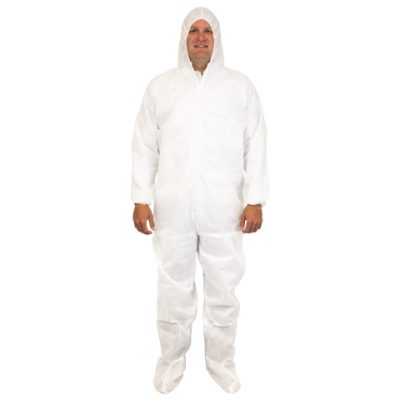
3 SMS Coveralls Blunders That Will Ruin Your Workflow—Avoid Them Now!
Meta Description: Are your SMS COVERALLS failing? Avoid these 3 common blunders that ruin your workflow, compromise safety, and trigger production halts in 2026.
I. Introduction
In high-stakes manufacturing and contamination-controlled environments, the reliability of your Personal Protective Equipment (PPE) is non-negotiable. SMS COVERALLS—engineered from a high-performance tri-laminate of Spunbond-Meltblown-Spunbond layers—are designed to provide a robust balance of filtration and comfort. However, even the most advanced protective gear can become a liability if deployed incorrectly.
When operational protocols ignore material limitations or fit requirements, the result is more than just a minor inconvenience; it can lead to hazardous particulate leakage, cross-contamination, and costly production shutdowns. To maintain optimal efficiency and safety standards in 2026, it is imperative to identify and rectify the common blunders that undermine the integrity of your protective barriers.
II. 3 SMS Coveralls Blunders That Ruin Workflow
1. Misinterpreting Material Breakthrough Thresholds
A frequent blunder is treating SMS COVERALLS as a universal barrier for all hazardous liquids. While the SMS architecture provides excellent protection against light splashes and aerosols, it is not designed to withstand high-pressure chemical jets or prolonged submersion.
-
The Risk: Expecting an SMS garment to perform in a “Type 4” environment—which requires liquid-tight, sealed-seam protection—leads to instant breakthrough, dangerous exposure to the worker, and immediate contamination of the production line.
2. Prioritizing Cost Over Ergonomic Fit and Seal
Procurement teams sometimes select SMS COVERALLS based solely on unit price, leading to ill-fitting garments with inadequate elasticization at the wrists, ankles, or hoods.
-
The Risk: If the coverall does not form a secure seal, the “bellows effect” occurs—every movement pumps contaminated air or dust inside the garment. This renders the high-efficiency filtration of the SMS fabric irrelevant, as hazards bypass the material entirely to contact the skin.
3. Neglecting Proper Donning and Doffing Protocols
The most common workflow failure is the improper removal of contaminated SMS COVERALLS. If workers do not follow strict procedures to avoid touching the contaminated exterior during removal, they inadvertently transfer trapped particulates back into the clean zone.
-
The Risk: This lack of process training nullifies the garment’s role in cross-contamination control, transforming a safety asset into a primary vector for spreading pollutants throughout your facility.
III. Strategic Alignment with TM&DV 8688 Co., Ltd.
Navigating the complexities of PPE deployment in 2026 requires more than just a product supplier—it requires a contamination-control strategist. TM&DV 8688 Co., Ltd. helps your facility avoid these common blunders by providing:
-
Elite Contamination-Control Strategies: Ensuring your team uses the correct fabric configuration for your specific hazard level.
-
Audit Readiness: Supporting your facility with robust product traceability and international certifications that ensure your safety protocols pass every inspection.
-
Operational Safety Improvements: Providing high-tensile, ergonomically designed protective gear that minimizes daily material waste and accidents.
IV. Contact Information
Stop compromising your production integrity due to avoidable PPE mistakes. Reach out to the specialists at TM&DV 8688 Co., Ltd. today to customize a comprehensive, high-performance PPE and contamination-control plan built for modern industry standards.
-
Hotline: 0941 09 8688
-
Email: info@8688.vn
-
Website: https://8688.com.vn