
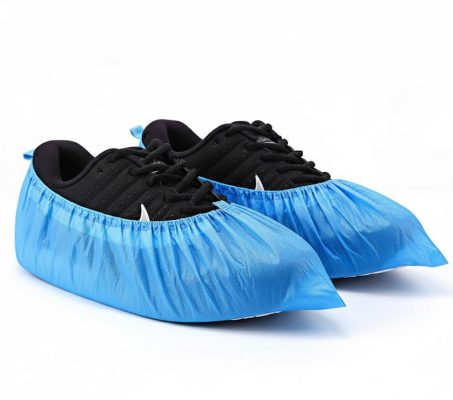
 The selection of appropriate personal protective equipment in chemical manufacturing facilities often receives inadequate attention until tragedy strikes. Among the most overlooked safety items are disposable shoe covers, particularly those manufactured from polypropylene materials. While PP shoe covers appear to be simple protective gear, improper selection has directly contributed to catastrophic incidents in industrial environments where flammable substances and static electricity create deadly combinations.
Understanding Why PP Shoe Covers Matter in Hazardous Environments
Chemical plants operate under conditions where multiple risk factors converge simultaneously. Workers navigate environments containing volatile organic compounds, combustible dust particles, and reactive chemicals while performing tasks that generate friction and movement. Every piece of protective equipment worn by personnel becomes part of the facility’s overall safety infrastructure.
PP shoe covers serve multiple protective functions beyond simple cleanliness maintenance. These lightweight barriers prevent contamination transfer between different production zones, protect workers’ personal footwear from chemical exposure, and maintain sterile conditions in sensitive manufacturing areas. However, the material composition and manufacturing quality of these covers directly influence their behavior in environments where static electricity accumulation poses explosion risks.
Polypropylene as a base material offers certain advantages including chemical resistance, cost effectiveness, and disposability. Yet the specific formulation, thickness, construction method, and additional treatments applied during manufacturing determine whether PP shoe covers function as passive protective equipment or become active contributors to workplace hazards.
Incident One: The 2018 Solvent Processing Facility Explosion in Southeast Asia
A pharmaceutical intermediates manufacturer experienced a devastating flash fire that injured seven workers and caused extensive equipment damage. Investigation reports identified the ignition source as static discharge from non-conductive PP shoe covers worn by a technician transferring acetone between vessels. The facility had recently switched suppliers to reduce costs, selecting untreated polypropylene shoe covers without verifying their electrostatic dissipative properties.
The incident occurred during a routine solvent transfer operation in a production area where vapor concentrations approached the lower explosive limit. As the technician walked across the epoxy-coated floor, his movements generated triboelectric charging between the PP shoe covers and flooring surface. Without conductive pathways to ground, the accumulated charge eventually discharged when he reached toward a grounded metal valve handle. The resulting spark, measuring approximately fifteen thousand volts, ignited acetone vapors in the immediate vicinity.
Post-incident analysis revealed that the replacement PP shoe covers possessed surface resistivity exceeding 10^14 ohms per square, classifying them as insulative materials. The original specification required shoe covers with resistivity below 10^11 ohms per square to ensure static dissipation. This seemingly minor procurement decision, made to reduce monthly supply costs by approximately twelve percent, created the conditions that transformed routine operations into a critical safety incident.
Incident Two: Static Accumulation During Powder Handling Operations
A specialty chemicals manufacturer in Central Europe faced a dust explosion in their fine powder processing area when using inappropriate PP shoe covers. The facility produced organic pigments through grinding operations that generated combustible dust clouds. During a production run, accumulated static electricity on a supervisor’s shoe covers discharged near a dust collection point, igniting suspended particles and causing a deflagration that propagated through connected equipment.
The investigation identified several contributing factors related to the PP shoe covers in use. The manufacturing process for these particular covers involved calendering techniques that created smooth, non-porous surfaces with enhanced insulative properties. While this construction method improved fluid resistance and durability, it eliminated any inherent static dissipation capability. Workers wearing these covers essentially insulated themselves from ground potential, allowing charge accumulation to reach ignition-capable levels.
The facility’s safety protocols required conductive footwear for powder handling operations, but the protocol failed to address disposable shoe covers worn over safety shoes. The PP shoe covers effectively negated the protective function of conductive footwear by creating an insulative barrier between the shoe and floor surface. This oversight in safety equipment compatibility assessment created a vulnerability that remained undetected until the incident occurred.
Incident Three: Ethanol Storage Area Flash Fire
A bioethanol production facility experienced a flash fire in their storage tank farm when a quality control inspector wearing standard PP shoe covers generated an incendive spark. The inspector had entered a containment area where recent maintenance activities had released ethanol vapors, creating a flammable atmosphere. The PP shoe covers, supplied as general-purpose disposables, accumulated static charge during walking that discharged when the inspector touched a grounded sampling valve.
This incident highlighted the critical importance of understanding complete protective equipment systems rather than evaluating individual components in isolation. The facility maintained rigorous electrical grounding protocols for all permanent equipment and required conductive footwear for operations personnel. However, temporary workers, contractors, and visiting quality control staff received standard disposable PP shoe covers without static dissipative properties.
The investigation revealed that the facility purchasing department selected PP shoe covers based primarily on two criteria: chemical compatibility with ethanol and cost per unit. Neither the requisition documents nor supplier specifications addressed electrostatic properties. The procurement process lacked input from safety engineering personnel who understood the specific hazards present in ethanol handling environments.
Incident Four: Isocyanate Manufacturing Clean Room Contamination Fire
A polyurethane precursor manufacturer experienced a fire initiated by static discharge from PP shoe covers during a controlled environment manufacturing operation. The facility produced isocyanate compounds in a clean room setting where environmental control included positive pressure, filtered air systems, and strict contamination protocols. Workers transitioned between different cleanliness zones using airlocks where they donned multiple layers of protective equipment including PP shoe covers.
The incident occurred when a technician exiting the airlock accumulated significant static charge through repeated contact with synthetic textiles and smooth flooring surfaces. The PP shoe covers, selected for their smooth texture and lint-free properties to maintain clean room standards, possessed extremely high surface resistivity. Upon entering the manufacturing area where isocyanate vapors existed at low concentrations, the accumulated charge discharged to a grounded process vessel, providing sufficient energy to ignite the flammable atmosphere.
This case demonstrated the challenge of balancing multiple protective requirements simultaneously. The PP shoe covers needed to prevent particulate contamination while also managing electrostatic hazards. The facility’s initial specification prioritized cleanliness characteristics without adequate consideration of static control requirements. The selected covers excelled at contamination prevention but created unacceptable ignition risks in the process environment.
Incident Five: Adhesive Manufacturing Facility Static Discharge Event
A pressure-sensitive adhesive manufacturer experienced a solvent fire traced to static discharge from improperly specified PP shoe covers worn during a cleaning operation. The facility used large quantities of hexane and toluene in their formulation process. During a scheduled equipment cleaning procedure, a maintenance technician wearing standard PP shoe covers generated a static discharge that ignited solvent vapors accumulated in a mixing vessel he was preparing to clean.
The incident investigation identified a systematic failure in the facility’s PPE selection process. The maintenance department ordered PP shoe covers through a general industrial supplier catalog, selecting products based on descriptions emphasizing chemical resistance and durability. The technical data sheets for the selected covers made no mention of electrostatic properties, and the purchasing decision included no verification of static dissipation capabilities.
Further investigation revealed that the facility operated under outdated safety protocols that had not been revised to reflect current understanding of static electricity hazards in solvent handling environments. While the organization had invested in grounded equipment, conductive flooring, and personnel grounding systems, the introduction of insulative PP shoe covers created gaps in the static control infrastructure that negated these investments.
Critical Selection Criteria for PP Shoe Covers in Chemical Facilities
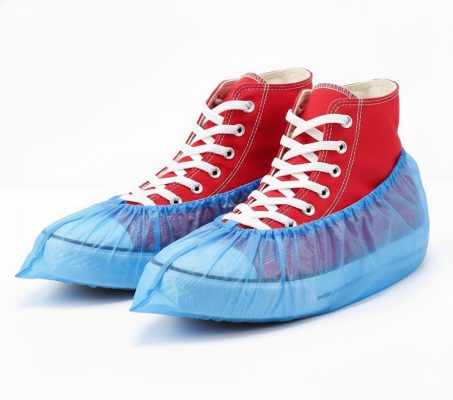
Selecting appropriate PP shoe covers for chemical manufacturing environments requires systematic evaluation of multiple technical parameters. Surface resistivity measurements provide the primary indicator of electrostatic dissipative properties, with values between 10^5 and 10^11 Ohms per square generally considered acceptable for static control applications. Covers exceeding 10^12 ohms per square should be avoided in environments containing flammable substances. These resistivity ranges are consistent with electrostatic control principles outlined in NFPA 77 – Recommended Practice on Static Electricity, which is widely referenced for managing static ignition hazards in chemical and flammable atmospheres.
Material formulation significantly impacts the static dissipative performance of PP shoe covers. Manufacturers may incorporate conductive additives, carbon particles, or specialized polymers to reduce surface resistivity. The distribution and concentration of these additives determine whether the covers maintain consistent static dissipation across their entire surface area. Uneven additive distribution can create localized insulative regions that compromise overall performance.
Construction methods influence both the mechanical durability and electrical properties of PP shoe covers. Ultrasonic welding, heat sealing, and adhesive bonding techniques each affect the cover’s ability to maintain structural integrity while providing continuous conductive pathways. Seam failures represent common weak points where static dissipation may be interrupted, creating potential accumulation sites.
Testing protocols should verify PP shoe covers performance under conditions approximating actual use environments. Standard test methods measure surface resistivity using concentric ring electrodes at controlled temperature and humidity conditions. However, real-world performance may differ significantly from laboratory measurements due to factors including floor contact pressure, contamination accumulation, and humidity variations. Facilities should consider periodic field testing of PP shoe covers during use to verify ongoing compliance with safety requirements.
Material Science Behind Static Control in PP Shoe Covers

The development of static dissipative PP shoe covers involves sophisticated materials engineering to balance multiple performance requirements. Pure polypropylene naturally functions as an excellent electrical insulator with resistivity values exceeding 10^16 ohms per square. Transforming this insulative material into static dissipative protective equipment requires intentional modification of its electrical properties while maintaining desirable characteristics including chemical resistance, mechanical strength, and manufacturing processability.
Carbon-based additives represent the most common approach to enhancing conductivity in PP shoe covers. Carbon black particles, carbon nanotubes, or graphene materials distributed throughout the polypropylene matrix create conductive pathways that allow charge dissipation. The concentration, particle size distribution, and dispersion quality of these conductive fillers directly determine the resulting electrical properties. Insufficient additive concentration produces inconsistent conductivity, while excessive concentration may compromise mechanical properties or processing characteristics.
Alternative approaches to static control in PP shoe covers include conductive polymer blends, metallic fiber incorporation, or topical antistatic treatments. Each method offers distinct advantages and limitations regarding durability, consistency, and cost effectiveness. Topical treatments may provide excellent initial performance but degrade rapidly through abrasion or chemical exposure. Intrinsic conductivity achieved through bulk material modification typically offers superior long-term stability.
Environmental Factors Affecting PP Shoe Covers Performance
The static dissipative performance of PP shoe covers varies significantly with environmental conditions, particularly relative humidity levels. Water molecules adsorbed onto polymer surfaces create conductive pathways that facilitate charge dissipation. At relative humidity above sixty percent, even untreated polypropylene may exhibit adequate static dissipation for some applications. However, relying on ambient humidity for static control creates unacceptable risks in controlled manufacturing environments where humidity fluctuates.
Chemical exposure during use can alter the electrical properties of PP shoe covers through several mechanisms. Some solvents may extract conductive additives from the polymer matrix, gradually increasing surface resistivity over time. Other chemicals may deposit insulative residues that block conductive pathways. Facilities using PP shoe covers in chemically aggressive environments should conduct periodic resistance measurements to detect degradation that compromises static protection.
Mechanical wear through normal use affects the static dissipative capability of PP shoe covers by disrupting conductive pathways and potentially exposing insulative substrate layers. Covers designed for extended use periods should incorporate conductive materials throughout their entire thickness rather than relying solely on surface treatments. Facilities should establish clear guidelines regarding the maximum use duration or physical condition warranting disposal and replacement.
Integrating PP Shoe Covers into Comprehensive Static Control Programs
Effective static electricity hazard management in chemical facilities requires systematic integration of multiple control measures operating synergistically. PP shoe covers represent one component within layered protection strategies that include conductive flooring, personnel grounding systems, equipment bonding, humidity control, and ionization where appropriate. The protective function of static dissipative shoe covers depends critically on their electrical continuity with other grounded elements in the facility.
Facility design should ensure that workers wearing appropriate PP shoe covers maintain continuous ground connection during all activities in hazardous locations. Conductive or dissipative flooring materials provide the foundation for personnel grounding through footwear and shoe covers. Regular verification of floor resistivity ensures that deterioration, contamination, or coating damage has not compromised grounding capability. The combined system of floor, footwear, and PP shoe covers should maintain point-to-ground resistance below acceptable thresholds throughout normal operations.
Training programs must educate workers about the critical role PP shoe covers play in static electricity control. Personnel should understand that protective equipment serves multiple simultaneous functions and that compromising any aspect of the protective system may create unacceptable risks. Workers should recognize signs of equipment degradation including visible damage, excessive wear, or contamination accumulation that may indicate replacement is necessary before scheduled disposal intervals.
Verification and Quality Assurance for PP Shoe Covers
Establishing robust incoming inspection protocols ensures that PP shoe covers delivered to facilities meet specified electrostatic performance requirements. Representative samples from each production lot should undergo resistivity testing using standardized methods before acceptance. Documentation should trace test results to specific lot numbers, enabling rapid identification and removal of non-conforming materials if performance issues emerge during use.
Supplier qualification processes should verify manufacturing capability to produce PP shoe covers with consistent static dissipative properties across multiple production runs. Quality audits should examine additive handling procedures, mixing protocols, process control systems, and final product testing methods. Suppliers demonstrating robust quality management systems and transparent documentation practices reduce risks associated with supply chain variability.
Change management protocols should prevent unauthorized substitution of PP shoe covers without appropriate safety review. Procurement personnel must understand that seemingly equivalent products may possess significantly different electrostatic properties despite similar appearance and basic specifications. Any proposed supplier change, cost reduction initiative, or product modification should trigger formal hazard assessment before implementation.
Developing Effective Specifications for PP Shoe Covers Procurement
Technical specifications for PP shoe covers used in chemical facilities should address electrostatic properties with the same rigor applied to chemical resistance and mechanical performance. Specifications should define maximum acceptable surface resistivity values, test methods for verification, and environmental conditions under which measurements apply. Clear pass-fail criteria eliminate ambiguity and provide objective bases for acceptance decisions.
Specifications should address durability requirements ensuring that PP shoe covers maintain static dissipative properties throughout their intended service life. Accelerated aging tests, abrasion resistance measurements, and chemical exposure protocols can predict long-term performance. Requirements should reflect actual use conditions including exposure to specific chemicals, temperature ranges, and mechanical stresses encountered in facility operations.
Documentation requirements should ensure complete traceability from raw material sourcing through final product delivery. Certificates of conformance should reference specific test data rather than generic statements of compliance. Technical data sheets should provide comprehensive electrical property data including surface resistivity, volume resistivity, and charge decay measurements under various environmental conditions.
Emergency Response Considerations Related to PP Shoe Covers
Emergency response planning should account for the role that inappropriately selected PP shoe covers may play in incident escalation. First responders entering areas where flammable atmospheres may exist following spills, leaks, or process upsets must wear verified static dissipative footwear and shoe covers. The urgency characterizing emergency operations creates conditions where static generation risks increase through rapid movement and potential contact with multiple surfaces.
Post-incident investigation protocols should routinely examine whether PP shoe covers worn by involved personnel contributed to ignition sequences. Physical evidence collection should include retrieval of shoe covers worn during incidents for subsequent laboratory analysis. Resistivity testing of actual equipment worn during incidents may reveal non-conforming materials that passed through procurement controls undetected.
Regulatory Framework Governing PP Shoe Covers in Hazardous Locations
Multiple regulatory standards and industry guidelines address electrostatic hazard control in facilities handling flammable materials. Occupational safety regulations require employers to assess workplace hazards including static electricity risks and implement appropriate controls. While regulations typically do not mandate specific PP shoe covers selection criteria, they establish performance-based requirements that indirectly govern protective equipment characteristics.
Industry consensus standards provide detailed technical guidance regarding acceptable resistivity ranges, test methods, and performance verification protocols for static dissipative footwear and shoe covers. These voluntary standards represent accumulated industry experience and expert consensus regarding effective hazard control approaches. Facilities may adopt these standards as internal requirements or reference them when developing procurement specifications.
Future Developments in Static Control Technology for PP Shoe Covers
Ongoing materials science research continues advancing static dissipative technology for PP shoe covers and related protective equipment. Novel conductive additives including graphene derivatives, intrinsically conductive polymers, and hybrid organic-inorganic materials offer potential performance improvements over conventional carbon-based systems. These emerging materials may provide enhanced conductivity consistency, improved durability, and better retention of mechanical properties.
Smart textile technologies incorporating embedded sensors may enable real-time monitoring of PP shoe covers electrical properties during use. Such systems could alert wearers when resistivity exceeds acceptable thresholds due to damage, contamination, or material degradation. Integration with facility safety management systems could prevent entry into hazardous areas by personnel wearing compromised protective equipment.
Manufacturing process innovations including additive manufacturing techniques and advanced polymer processing methods may enable production of PP shoe covers with precisely controlled electrical property gradients. Such designs could optimize both static dissipation and other performance characteristics including comfort, durability, and chemical resistance through intentional spatial variation of material composition.
Conclusion:
The five incidents examined throughout this analysis demonstrate unequivocally that PP shoe covers selection deserves serious attention as a critical component of chemical facility safety programs. These seemingly simple disposable items function as essential elements within comprehensive static electricity control systems. Inappropriate selection transforms them from passive protective equipment into active contributors to catastrophic hazards.
Facility managers, safety professionals, and procurement personnel must collaborate to develop rigorous specifications ensuring that PP shoe covers possess verified static dissipative properties appropriate for their intended use environments. This requires moving beyond superficial product comparisons focused solely on cost and basic functionality to embrace systematic evaluation of electrical characteristics, long-term durability, and integration with facility-wide hazard control infrastructure.
For facilities seeking reliable PP shoe covers that meet static control requirements while offering chemical resistance and durability, 8688.vn provides solutions designed for chemical manufacturing environments. Our products are quality-controlled to meet essential safety standards.
Visit 8688.vn to learn more about our industrial safety products and choose the right PP shoe covers to help protect your workforce and facility.
