
Discover why PP fabric is the safest material for baby sterilized wet and dry wipes. Learn 5 powerful reasons trusted by manufacturers and parents worldwide.
I.Introduction: Why Material Choice Matters for Baby Wipes
When it comes to baby care, material safety is not a preference—it is an absolute requirement. A baby’s skin is up to five times thinner than adult skin, making it significantly more sensitive to friction, chemical exposure, and environmental contaminants. Every wipe that comes into contact with a baby’s skin has the potential to either protect or harm, depending entirely on the nonwoven material used.
Baby wipes are used repeatedly throughout the day—during diaper changes, feeding routines, and daily hygiene care. This frequent contact means that even minor imperfections in a wipe material can accumulate over time, leading to irritation, redness, or long-term skin sensitivity. For this reason, both parents and manufacturers must look beyond surface softness and focus on what truly matters: skin safety, material purity, and sterilization compatibility.
This is precisely why polypropylene nonwoven fabric for baby sterilized wipes has emerged as the preferred choice for premium wet and dry wipes worldwide. Unlike traditional woven textiles or lower-grade nonwoven alternatives, this hygiene-grade nonwoven material is specifically engineered for hygiene-critical applications. It is designed to remain gentle on delicate skin while consistently meeting stringent cleanliness and performance requirements.
What truly sets this polypropylene-based nonwoven structure apart is its balanced combination of skin-friendliness, chemical stability, and resistance to industrial sterilization processes. It does not rely on harsh binders, does not shed fibers during use, and maintains structural integrity even after high-temperature or medical-grade sterilization. As a result, this skin-safe nonwoven fabric delivers confidence to parents and reliability to manufacturers—two essential foundations of trustworthy baby care products.
However, softness alone is not enough. In a market saturated with baby wipes labeled as “gentle” or “natural,” understanding what makes a hygiene-grade nonwoven material scientifically safer is more important than ever.
So, what exactly makes polypropylene nonwoven material the safest option for baby sterilized wipes? Below are five powerful reasons why this industry-standard nonwoven fabric continues to be trusted as the global benchmark for baby hygiene products.
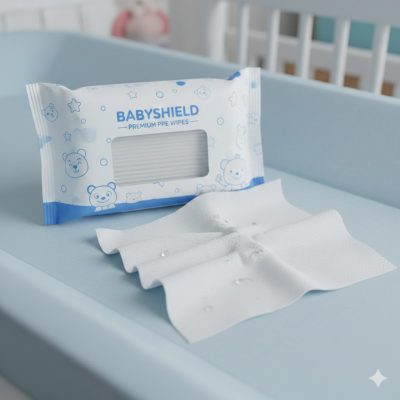
1. PP Fabric Is Skin-Safe and Non-Irritating for Babies
One of the most important reasons PP fabric for baby sterilized wipes is so widely trusted lies in its exceptional level of skin safety. Baby skin is uniquely delicate—not only thinner than adult skin, but also biologically immature. Its protective barrier is still developing, making it far more vulnerable to friction, moisture imbalance, and external irritants. In this context, even the smallest material imperfection can have an outsized impact.
PP fabric is specifically engineered with a naturally soft, smooth, and highly uniform surface, designed to move gently across delicate skin. Its refined nonwoven structure allows the wipe to glide evenly, reducing pressure points and eliminating rough contact areas.
Unlike traditional woven fabrics—which often contain twisted yarns, uneven fiber density, or abrasive edges—PP fabric offers structural consistency across the entire surface. This consistency significantly reduces friction and helps prevent micro-abrasions—tiny, often invisible disruptions to the skin barrier that can accumulate with repeated wiping.
The skin-friendly performance of PP fabric for baby sterilized wipes comes from a combination of carefully controlled material properties:
-
Naturally soft and smooth surface that does not scratch, drag, or irritate
-
Free from harsh, broken, or protruding fibers that can cause redness or friction
-
No fiber shedding, minimizing the risk of lint or particles remaining on the skin
-
Suitable for newborns, premature infants, and babies with highly sensitive skin
These characteristics are particularly important for babies prone to skin sensitivity, diaper rash, or allergic reactions, where maintaining an intact skin barrier is essential for comfort and overall skin health.
A common weakness of lower-quality wipes is that they lose softness or become rough once moistened. PP fabric for baby sterilized wipes maintains its softness, flexibility, and surface integrity even when wet, ensuring a consistently gentle experience from start to finish.
This reliability is critical in areas most susceptible to irritation, including:
-
The diaper zone
-
Facial and neck folds
-
Hands and mouth area after feeding
In these sensitive regions, consistent softness is not a luxury—it is a necessity.
Unlike some conventional fabrics that weaken, stiffen, or degrade after exposure to moisture, PP fabric retains its structure, strength, and softness throughout use. Each wipe performs the same way as the first—without pulling, tearing, or rubbing against the skin.
By maintaining this balance between softness and durability, PP fabric helps reduce the risk of cumulative irritation caused by frequent wiping. This makes it especially well-suited for daily baby hygiene routines, where safety, comfort, and reliability must work together seamlessly.
In essence, PP fabric does not simply clean the skin—it helps protect it. By prioritizing skin safety at the material level, PP fabric raises the standard for baby sterilized wipes and reflects a deeper understanding of infant skin needs.
For parents, this means greater confidence in everyday care. For manufacturers, it means delivering products aligned with medical-grade expectations. And for babies, it means a gentler, safer, and more comfortable experience—every single day.
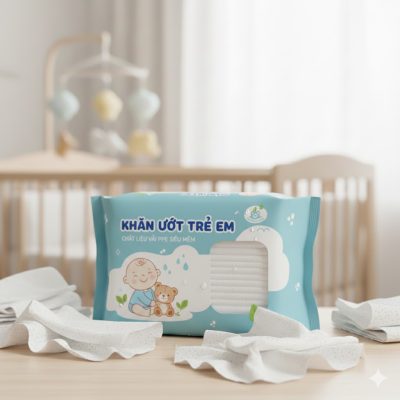
2. PP Fabric for Baby Sterilized Wipes Contains 0% Harsh Chemicals
One of the most critical safety advantages of PP fabric for baby sterilized wipes is its chemical purity. In baby care products, even trace amounts of harsh chemicals can pose risks, as infant skin absorbs substances far more easily than adult skin. This makes material selection not just important—but essential.
PP (Polypropylene) fabric is manufactured using a mechanical bonding process, which eliminates the need for chemical binders, bleaching agents, latex, or toxic finishing treatments commonly found in lower-grade materials. As a result, PP fabric offers a naturally clean foundation for baby wipes—without hidden chemical exposure.
Unlike fabrics that rely on adhesives or chemical softeners to maintain structure, PP fabric maintains its integrity without chemical reinforcement. This means:
-
No toxic residues left behind on baby skin
-
No skin-triggering additives that may cause redness or allergic reactions
-
No chemical migration during use, even when the wipe is moist or warmed
For parents, this translates into peace of mind—knowing that each wipe is free from substances that could irritate or disrupt a baby’s sensitive skin barrier.
Baby wipes are used multiple times a day, often on the most sensitive areas of the body. With PP fabric baby wipes, there is no cumulative chemical exposure over time. The fabric does not release hidden compounds through friction, moisture, or heat, making it ideal for frequent, long-term use.
This is particularly important for babies with:
-
Sensitive or allergy-prone skin
-
Diaper rash or eczema tendencies
-
Newborns requiring extra-gentle care
Thanks to its chemical stability, PP fabric for baby sterilized wipes is widely used in medical and hygiene-critical environments, including hospitals, neonatal care units, and sterile manufacturing facilities. The absence of reactive chemicals ensures that the fabric remains safe even after sterilization processes such as steam, EO, or gamma treatment.
In short, PP fabric does not mask safety—it delivers it at the material level. By eliminating harsh chemicals entirely, PP fabric sets a higher standard for baby sterilized wipes and reinforces its position as the trusted choice for medical-grade and premium baby care products.
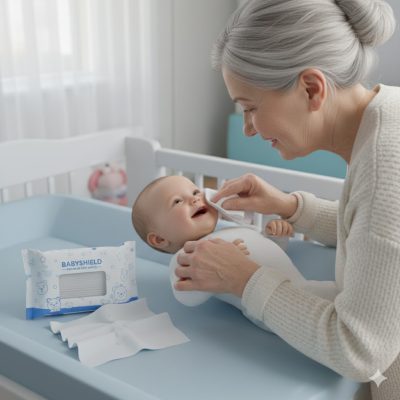
3. Superior Sterilization Compatibility of PP Fabric
Sterilization is a non-negotiable requirement for high-quality baby wipes—yet not all fabrics are capable of withstanding sterilization processes without compromising safety or performance. Many conventional materials lose softness, weaken structurally, or release residues when exposed to heat or radiation. This is where PP fabric for baby sterilized wipes truly excels.
PP (Polypropylene) fabric is inherently thermally stable and chemically inert, allowing it to endure multiple sterilization methods without degradation. This makes it an ideal material for baby wipes that must meet medical-grade hygiene standards.
PP fabric is widely trusted because it performs reliably across the most common industrial sterilization techniques:
-
Steam sterilization: Maintains strength and softness under high temperature and moisture
-
EO (Ethylene Oxide) sterilization: Remains stable without chemical absorption or residue retention
-
Gamma irradiation: Preserves fiber structure and hygiene integrity under radiation exposure
Unlike inferior fabrics that shrink, harden, or break down, PP fabric retains its original form and function throughout these processes.
A critical advantage of PP fabric for baby sterilized wipes is its ability to maintain structural integrity and surface smoothness even after sterilization. The fibers do not fuse, stiffen, or shed, ensuring that every wipe remains gentle on baby skin.
This consistency is essential because sterilization alone is not enough—the wipe must still perform safely during actual use. PP fabric ensures:
-
No loss of softness after high-temperature treatment
-
No fiber deformation or tearing during wiping
-
No compromise in absorbency or flexibility
Because PP fabric resists contamination and degradation, it supports end-to-end hygiene control—from manufacturing and sterilization to packaging and final use. Each wipe remains clean, stable, and safe until the moment it touches a baby’s skin.
This superior sterilization compatibility is why PP fabric is the material of choice for hospital-grade baby wipes, neonatal care products, and export-standard hygiene goods.
In essence, PP fabric does not simply survive sterilization—it is designed for it. By maintaining cleanliness, softness, and safety after rigorous sterilization processes, PP fabric ensures that every baby wipe delivers the highest level of protection and peace of mind.
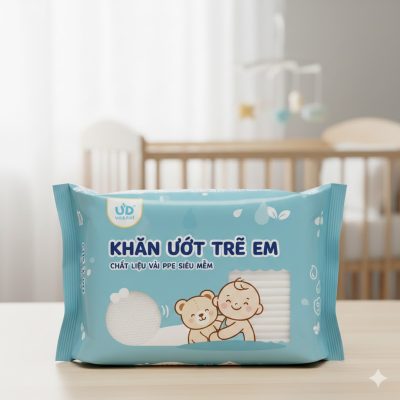
4. PP Fabric Offers High Absorbency for Wet & Dry Baby Wipes
A truly high-quality baby wipe must achieve a delicate balance between absorbency, strength, and surface stability. A wipe that absorbs moisture but tears easily creates frustration and waste. Conversely, a wipe that remains strong but fails to absorb effectively can leave moisture on the skin, increasing friction and the risk of irritation. PP fabric for baby sterilized wipes delivers all three performance requirements—without compromise.
PP fabric is engineered with a highly uniform nonwoven structure, allowing liquids to be absorbed quickly and distributed evenly across the entire surface of the wipe. Instead of pooling in one area or dripping during use, moisture is held within the fabric matrix—right where it is needed.
This controlled absorption provides several key advantages:
-
Efficient liquid uptake for fast, effective cleaning
-
Balanced moisture retention, preventing over-wetting or mess
-
Even distribution of liquid, ensuring consistent cleaning performance
For parents and caregivers, this means fewer wipes needed per use, less wiping pressure, and a more comfortable experience for the baby.
One of the most common failures of low-quality baby wipes is loss of strength when wet. Once moistened, many fabrics stretch, tear, or deform—making thorough yet gentle cleaning difficult. PP fabric baby wipes are designed to maintain strength and integrity even when fully wet.
Thanks to its durable fiber bonding and structural stability, PP fabric:
-
Resists tearing and stretching during use
-
Maintains shape and structure under applied pressure
-
Performs reliably through repeated wiping motions
This reliability is especially important during diaper changes, where cleaning must be both gentle and effective—without requiring excessive force or multiple wipes.
Another critical advantage of PP fabric for baby sterilized wipes is its lint-free performance. The fabric does not shed fibers, even when wet or rubbed repeatedly against delicate skin.
This ensures:
-
No loose fibers left on the baby’s body
-
No particles trapped in skin folds or creases
-
A cleaner, more hygienic wiping experience overall
Lint-free performance is particularly important for sensitive areas, where even small particles can cause discomfort or irritation.
Whether used as dry wipes for gentle blotting or as pre-moistened sterilized wipes, PP fabric delivers consistent, predictable results. Its adaptability makes it suitable for a wide range of baby care needs—from routine hygiene to sensitive skin care and post-cleaning drying.
This versatility allows manufacturers to use a single high-performance material across multiple product lines, while parents benefit from wipes that perform reliably in every situation.
In summary, PP fabric does more than simply absorb moisture—it performs with precision. By combining high absorbency, superior wet strength, and excellent fiber stability, PP fabric ensures that every baby wipe remains effective, gentle, and dependable—regardless of how it is used.
For parents, this means easier, more comfortable care routines. For manufacturers, it means consistent quality and reduced product failure. And for babies, it means cleaner skin with less irritation—every time.
II. Conclusion: PP Fabric Is the Smartest and Safest Choice for Baby Wipes
Choosing the right material for baby wipes is far more than a technical decision—it is a direct commitment to infant health, comfort, and long-term skin protection. Every wipe that touches a baby’s skin must meet the highest standards of safety, purity, and performance. In this regard, PP fabric consistently proves itself as the smartest and safest choice for baby sterilized wet and dry wipes.
With its skin-safe and non-irritating structure, 0% harsh chemical composition, exceptional compatibility with multiple sterilization methods, high absorbency combined with wet strength, and widespread global trust, PP fabric delivers comprehensive protection at every stage of use. It is a material designed not only to clean—but to protect, preserve, and reassure.
For parents, PP fabric provides peace of mind during daily care routines. For manufacturers, it offers consistency, compliance, and scalability. For healthcare and hygiene professionals, it represents reliability in environments where safety cannot be compromised. This rare combination is what elevates PP fabric for baby sterilized wipes from a material choice to an industry benchmark.
In today’s market, where claims of “gentle” and “safe” are everywhere, true safety begins at the material level. PP fabric does not rely on marketing promises—it is backed by engineering, standards, and decades of proven performance. That is why choosing PP fabric is not merely an option; it is a responsibility shared by brands, manufacturers, and caregivers alike.
At TM&DV 8688 Co., Ltd., we are dedicated to delivering professional PPE and hygiene solutions that meet the practical, real-world demands of modern service and healthcare environments. From spas, clinics, and wellness centers to service facilities and hygiene-critical workplaces, our solutions are engineered to support safety, efficiency, and long-term operational confidence.
Every product we supply is developed with a clear focus on material integrity, durability, regulatory compliance, and consistent performance. We believe that effective hygiene protection should not only meet standards on paper—but perform reliably in daily use, under real conditions, and at scale. That is how we help businesses protect their spaces, staff, clients, and reputation.
We understand that in hygiene and PPE applications, trust begins at the material level. That is why TM&DV 8688 Co., Ltd. places uncompromising emphasis on quality materials, controlled production processes, and proven performance standards. Our solutions are designed to align with international hygiene requirements, ensuring they are suitable for both domestic use and export markets.
Beyond compliance, we focus on long-term value—offering products that support sustainable, scalable operations while minimizing risk, waste, and replacement costs. This commitment allows our partners to operate with confidence, knowing their hygiene solutions are dependable, consistent, and future-ready.
Whether you are upgrading hygiene standards, expanding services, or supplying professional-grade products to demanding environments, TM&DV 8688 Co., Ltd. is ready to support your goals with practical expertise and reliable solutions.
📌 Discover how TM&DV 8688 Co., Ltd. can support your business today:
🌐 Website: 8688.com.vn
📞 Hotline: 0909 868 688
📧 Email: info@8688.vn
TM&DV 8688 Co., Ltd. — Professional Protection. Trusted Quality. Long-Term Peace of Mind.
